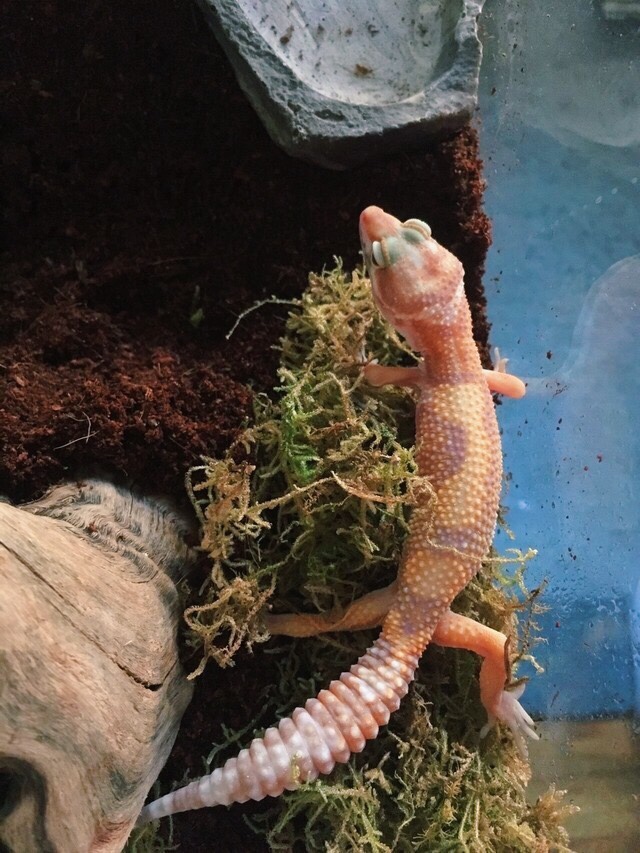
 For today’s post I have a Leopard Gecko care and set up sheet planned. Seeing as we’re up to 10 geckos total, I figured it’s time we show you how we care for Snow & Loki. When we first got Snow her tail started to fatten up really fast and those large spots she had have since broken apart to form “leopard spots”.
 #LeopardGeckos otherwise known as, Eublepharis macularius are a desert/ arid species of gecko naturally found in the highlands of Asia and Afghanistan. They come is many color combinations from orange, yellow, white and black to a mixture of all the above. As an adult they’ll range from 6-9 inches long from head to tail. Unlike our #CrestedGeckos these guys can regenerate a new tail after dropping it, however it comes back smooth unlike the texture of their bodies. With the best of care, these geckos can live up to about 20 years. Their diets are strictly insectivorous, including mealworms, dubia roaches, crickets and more!! Snow and Loki go ham on the wiggling worms we dust with calcium and dump in their bowls bowl. It’s super important to give these guys 24/7 access to some water & calcium in their tank in case they need more. Leopard geckos are able to find calcium in their tank if you leave it for them. When their body starts to drop in calcium levels they’ll go out of hiding and lick some to compensate. It’s super important to leave some even if it isn’t pretty to look at. Just like gut loading the Crested Gecko bugs with vitamins/calcium it is required every feeding for these guys.
As a solitary desert species they live on the ground in a hide with a basking spot or heat mat and unless mating they are loners. We got a Zoo Med heating mat that sticks to the bottom of their tank in two places right under their hides, outside the tank we have a probe and dial to control the temperatures too. Make sure your tank is big enough for your gecko, a ten gallon is a good start for these guys. You can decorate it however you like, We made a mixed terrain tank with calci-sand and Eco Earth. I really DO NOT recommend Repti-carpet their tiny claws can get caught and rip their toes off, the likeliness of them impacting on process-able loose substrate is low. With loose substrate you have two options for their poo, go bioactive so spring tails and other decomposers to deal with the mess and put out vitamins for a healthy ecosystem or invest in a little litter scoop to take the waste out. If you notice their waste looks odd check the temperatures and make sure they’re 78 degrees at least and 88 degrees at most. The heat helps break down the chitin in their gut, otherwise your gecko will regurgitate its food and get nothing out of it or end up starving itself. Plus any reptile vomit can be more harmful than the problem they had with it going down. NO RED LIGHTS THEY ARE TERRIBLE FOR ALL REPTILE EYES!! The heat and occasional misting will help with shedding process, even though you may never see it in person because they are cave dwellers.
Enjoy your new Leo if you’re reading this to set up it’s new home. Otherwise, I hope you can see how easy it is to care for these guys and maybe you’ll decide to get one for yourself. Let me know if you’re inspired by this post, I’d love to hear all about it. Loki & Snow say hi!!
 Grey2Bay