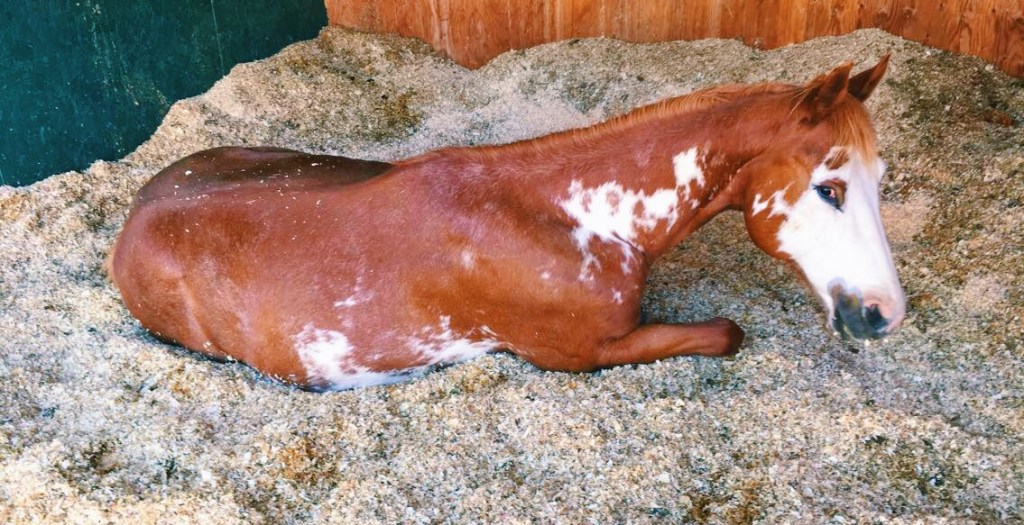
As you guys gain more time and experience with horses you’ll come across a variety of new and unthinkable injuries. You’ll wonder how they made it out alive, how they did it, you’ll spend hours trying to find the object or protrusion that got them only to still be scratching your head in genuine confusion at the end of it all. It’s part of a horses “charm”, and your bank account learns to tolerate this behavior since they are so loved at the end of the day.
That being said if your horse lives in a area where they could bang their hocks, get kicked, roll into objects, kick out into something etc they are at greater risk for the injury we’re talking about today. Given how loved our four legged friends are I wanted to share this potential injury with y’all so it wouldn’t come as a surprise when you finally have a horse in your full care.
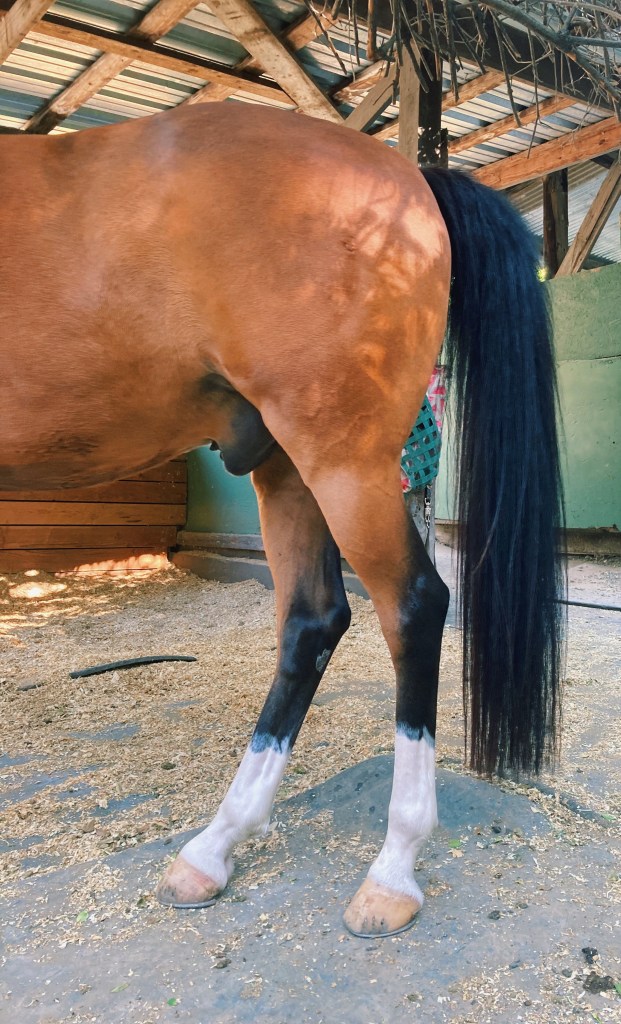
As mentioned this is an injury to the hock commonly known as “capped hock”, or bursitis of the hock. This is a fairly common injury among horses, and is much like banging your funny bone with a bit more consequences. The human elbow is also prone to bursitis so horses aren’t the only ones affected by this.
Caused by trauma directly to the hock usually from trailering, bumping a stall wall getting up from a nap or any other time the joint is banged. A firm swelling will occur about the size of a kiwi at the site and may cause mild lameness. However, the blemish might become permanent without proper management or your equine companion might become more prone to them. In an instance like this it is always best to ring your veterinarian.
When it comes to joints or any injury where synovial fluid might be compromised a vet call is due.
“If accumulation of the fluid is not reduced in a reasonable period of time, then a subcutaneous bursa or ‘false’ bursa will develop. At this point, once the fluid accumulation has been there for a long period of time, the lining of the subcutaneous sac of the bursa becomes more or less a permanent fixture.” (The Horse)
Types of treatment include vet ordered anti-inflammatory medications, rest, cold water/ icing, hock wraps/ pressure bandage (this will help prevent the build up of subcutaneous bursa fluid- therefore making it less likely to have a disfigured hock after it’s healed). Depending on the severity, surgery is an option to remove excess tissue from the site especially if your horse is prone to this sort of thing.
When in doubt always ring a vet and provide as much documentation and factual (relevant) evidence as possible to help diagnose the issue.
 Grey2Bay