Now that the rainy season is just about here, we can expect our horses, mules and ponies to be struggling with thrush.
Today’s post has been updated and tweaked so many times since I first wrote it in 2018, I’m sure you guys will see it again in time. I find it important to repeat myself when it comes to certain aspects of horse care, just because seeing it more will make it easier for me and anyone reading to remember it.
Thrush is preventable and a manageable hoof problem. It is a bacterial infection of the sole of the hoof and it’s frog. The frog covers a quarter of the horses sole, and supplies blood from the bottom of the hoof to the top of the leg. In some cases it’s used for traction and for shock absorption, but it’s primary purpose is blood supply.
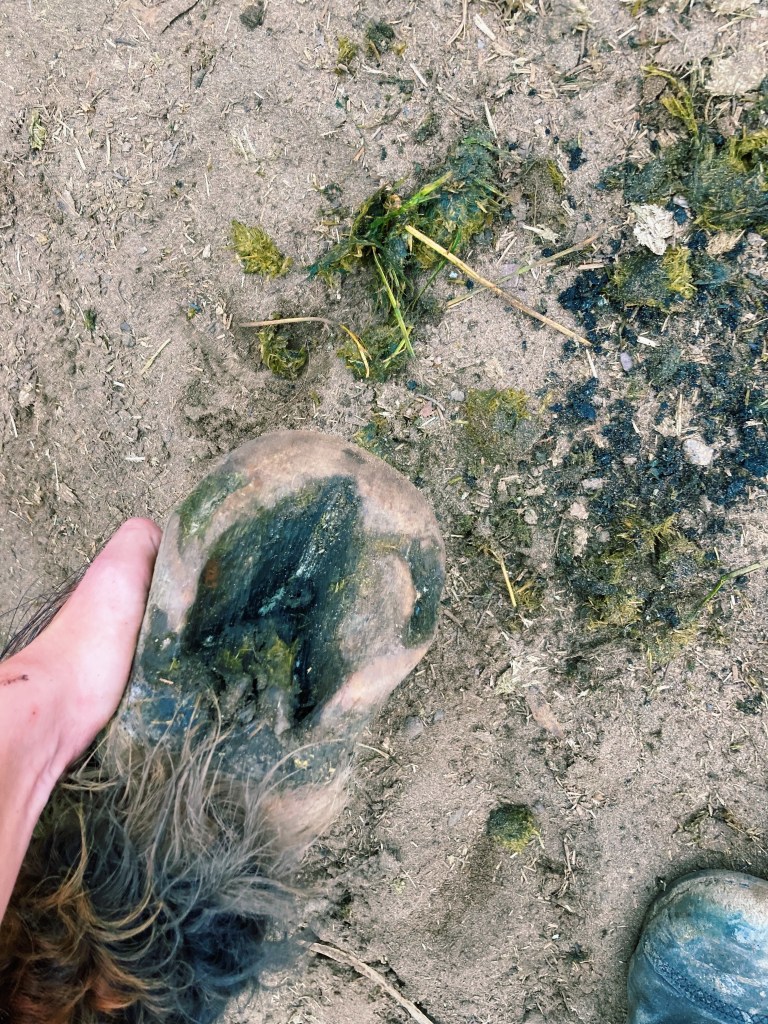
Thrush takes over this area and the grooves along the frog, called sulci. It causes necrotic hoof tissue, a foul sewer like smell and black oily discharge from the hoof. Often times, the next farrier visit will take care of this for your horse. Trimming away the dead tissue is the quickest and surest way to remove the infection. Otherwise, topical treatments, vet visits and farrier time may be required in some cases.
I use the Sport Horse Essentials Hoof Oil religiously on horses I have access to. This hoof oil is guaranteed to prevent thrush and is used as treatment for it when it occurs. I have sworn up and down that this product is the only one that I will use on thrush, and while that’s true, sometimes other people recommend other methods.

I recently learned that the old school Kopertox and Thrush Buster thrush treatments are very very bad for human health, so I will never use them again or store them in my barn if I have the say so. They are the go to green or purple solutions that stain like no other, which is another reason I would stay away from them.
Given enough time out of the boggy conditions, our horses feet will bounce back in no time. I recommend finding a way to have a dry spot in your horses stall to help with this process. That could be using a small hill or grade to your advantage, placing a mat somewhere to give relief or making sure the inside part of your stall gets cleaned enough to lay dry fresh bedding so no bacteria has time to fester in the feet zone.
That’s all for today’s thrush post, I hope this helps you conquer the wet months to come. I wish I could say autumn is on its way here in Arizona, but I would be lying. I will be treating thrush for the rest of the summer due to the monsoons, so wish me luck.
 Grey2Bay